
Welcome to Code Point
Here we present All type of Blog


Here we present All type of Blog
Iam presenting here ,all type of knowledge if you want to interest knowing about any topic then click below thumbnail view button and knowing.
.jpg)
What is Artificial Intelligence?
July 17, 2023 by Code Point
AI, short for Artificial Intelligence, is the science and engineering of creating intelligent machines that can perform tasks typically requiring human intelligence. AI systems are designed to simulate human cognitive abilities such as learning, reasoning, problem-solving, and understanding natural language. These machines use algorithms and vast amounts of data to make data-driven decisions and improve their performance over time. AI has applications in various industries, including healthcare, finance, transportation, and entertainment. It continues to evolve rapidly, presenting opportunities and challenges in our increasingly connected world.
Introduction
AI, or Artificial Intelligence, is a branch of computer science focused on creating intelligent machines that can perform tasks requiring human-like intelligence. It involves developing algorithms that enable machines to learn from data, recognize patterns, and make decisions. AI has practical applications in diverse fields, revolutionizing industries and impacting our daily lives. As technology advances, AI holds tremendous potential to shape the future and improve various aspects of society.
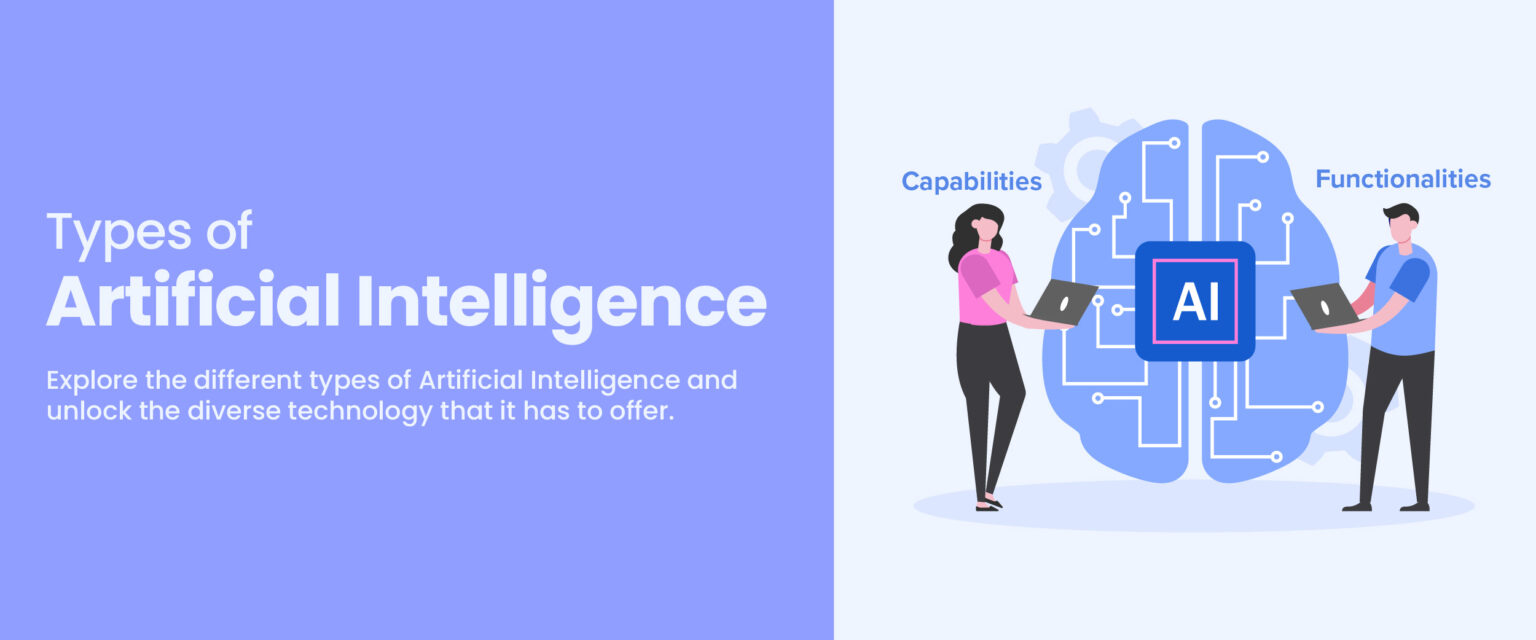
1. Narrow AI (Weak AI) : AI systems designed for specific tasks within a limited domain.br
2. General AI (Strong AI): AI with human-like cognitive abilities, capable of understanding,
learning, and applying knowledge across diverse domains.
3. Artificial Superintelligence (ASI): Hypothetical AI that surpasses human intelligence in all
aspects.
4. Reactive AI: Basic AI that operates based on predefined rules and doesn't have memory or learning
capabilities.
5. Limited Memory AI: AI with the ability to learn from past experiences to make decisions based on
historical data.
6. Theory of Mind AI: Theoretical AI with the capacity to understand human emotions, beliefs, and
intentions.
7. Self-aware AI: Theoretical AI possessing self-awareness, consciousness, and understanding of its
own existence.
Please note that this list provides a brief overview of different types of AI, and AI research is an
ongoing field with continuous advancements and discoveries.
1. Virtual Assistants: Virtual assistants like Siri, Google Assistant, and Alexa are examples of AI
applications that use natural language processing (NLP) and machine learning to understand and
respond to user queries.
2. Image Recognition: AI-powered image recognition systems, such as those used in facial recognition
technology, autonomous vehicles, and content tagging on social media platforms, enable computers to
identify and classify objects and patterns in images.
3. Recommendation Systems: Online platforms like Netflix, Amazon, and Spotify use AI algorithms to
provide personalized recommendations to users based on their past behavior and preferences.
4. Natural Language Processing (NLP): NLP applications, such as language translation tools,
sentiment analysis, and chatbots, use AI techniques to understand and interpret human language.
5. Autonomous Vehicles: Self-driving cars and autonomous drones utilize AI and machine learning to
perceive their surroundings, make decisions, and navigate without human intervention.
6. Healthcare Diagnostics: AI is being applied in medical diagnosis, using machine learning
algorithms to analyze medical images and identify diseases like cancer, enabling faster and more
accurate diagnoses.
7. Gaming: AI is extensively used in video games to create intelligent and adaptive non-player
characters (NPCs) that can react to the player's actions and provide a challenging gaming
experience.
8. Robotics: AI-powered robots are employed in various industries, including manufacturing,
healthcare, and space exploration, to perform tasks autonomously and efficiently.
9. Language Translation: Online translation services like Google Translate leverage AI and NLP to
translate text between different languages.
10. Fraud Detection: AI is used by financial institutions to detect fraudulent transactions by
analyzing patterns and identifying suspicious activities.
These examples illustrate the diverse applications of AI across various industries and daily life.
They demonstrate how AI technologies are continuously evolving to improve efficiency, accuracy, and
user experiences.
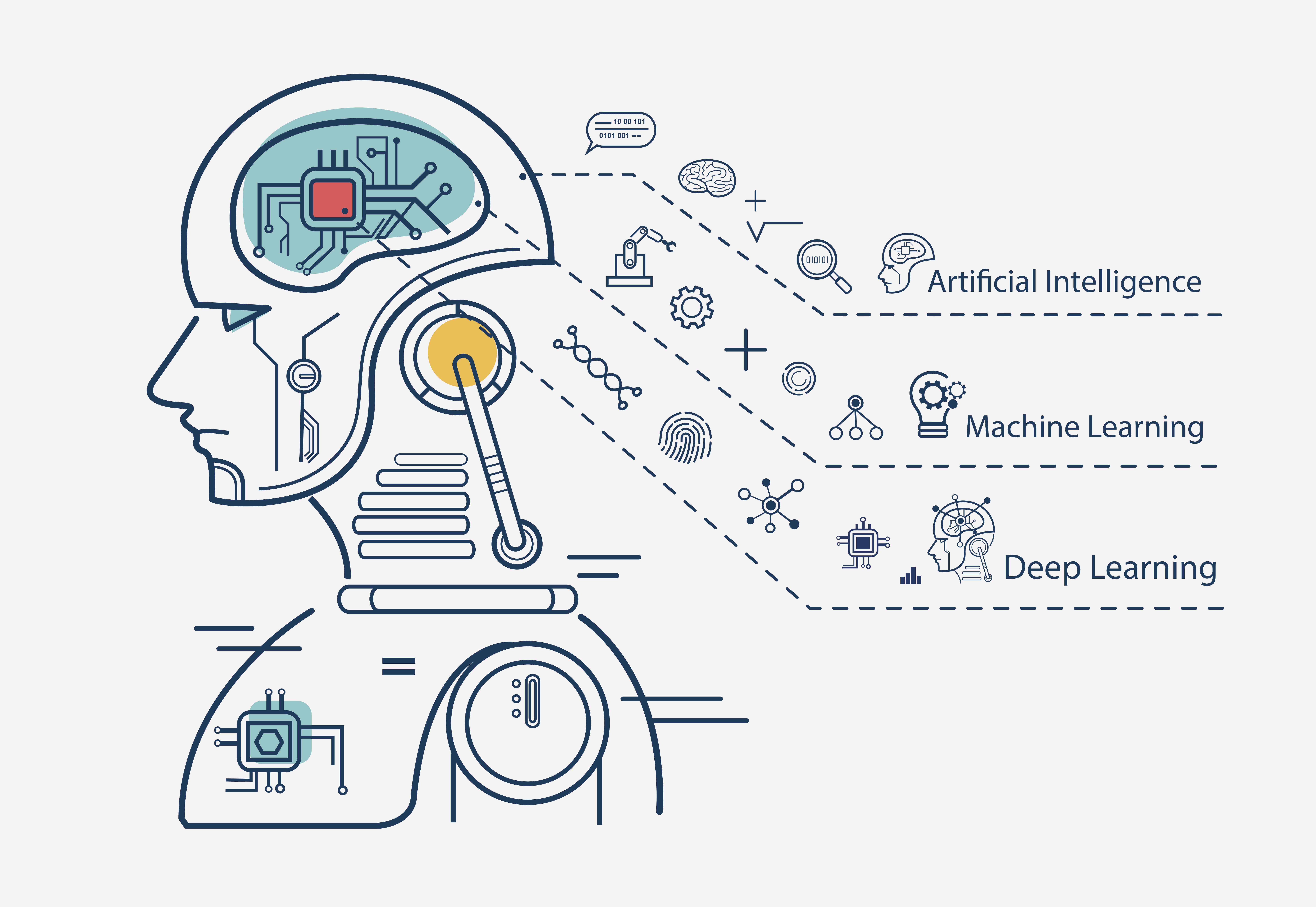
1. Machine Learning (ML): Machine learning is a subset of AI that enables machines to learn from
data and improve their performance without being explicitly programmed. ML algorithms are widely
used in various applications, including image recognition, natural language processing, and
recommendation systems.
2. Neural Networks: Neural networks are a type of ML algorithm inspired by the human brain's
structure and functioning. They consist of interconnected artificial neurons that can recognize
patterns and make complex decisions based on input data.
3. Natural Language Processing (NLP): NLP involves AI techniques that enable computers to
understand, interpret, and respond to human language. NLP is the backbone of chatbots, language
translation, sentiment analysis, and voice assistants.
4. Computer Vision: Computer vision focuses on teaching machines to interpret and understand visual
information from images and videos. It is used in applications like facial recognition, object
detection, and autonomous vehicles.
5. Expert Systems: Expert systems are AI programs that emulate the decision-making capabilities of
human experts in specific domains. They use knowledge bases and rules to provide expert-level advice
or solutions.
6. Reinforcement Learning: Reinforcement learning is a type of ML where an agent learns to make
decisions by interacting with an environment and receiving feedback in the form of rewards or
penalties.
7. Robotics: Robotics combines AI with mechanical engineering to create intelligent machines
(robots) that can interact with the physical world, perform tasks, and adapt to changing conditions.
8. Speech Recognition: Speech recognition focuses on enabling computers to recognize and understand
human speech, leading to applications like voice assistants and speech-to-text systems.
9. Planning and Optimization: AI techniques for planning and optimization involve developing
algorithms to devise strategies and make decisions to achieve specific goals efficiently.
10. Data Mining: Data mining involves using AI algorithms to discover patterns and extract useful
information from large datasets.
These components form the building blocks of AI and are crucial for creating intelligent systems
with practical applications in various industries and domains. AI research and development continue
to progress rapidly, driving innovation and shaping the future of technology.
Machine Learning (ML) is a subfield of Artificial Intelligence (AI) that focuses on developing
algorithms and statistical models that enable computers to learn and improve their performance on a
specific task without being explicitly programmed. It is a powerful tool for making predictions,
identifying patterns, and solving complex problems based on data.
Key characteristics of machine learning include:
1. Learning from Data: ML algorithms learn patterns and relationships from a vast amount of data.
The more data they have, the better they can make accurate predictions and decisions.
2. Generalization: After learning from the data, ML models can generalize their knowledge to make
predictions on new, unseen data.
3. Adaptability: ML models can adapt to changing data and update their predictions accordingly.
4. Feature Extraction: ML algorithms can automatically extract relevant features from the data,
reducing the need for manual feature engineering.
Machine learning can be categorized into several types, including:
1. Supervised Learning: In supervised learning, the algorithm is trained on labeled data, where the
correct output is provided. The model learns to map input data to the correct output during the
training phase and can make predictions on new, unlabeled data.
2. Unsupervised Learning: In unsupervised learning, the algorithm is trained on unlabeled data, and
it tries to find patterns, structures, or relationships within the data without explicit guidance.
3. Semi-Supervised Learning: Semi-supervised learning is a combination of supervised and
unsupervised learning, where the algorithm learns from both labeled and unlabeled data.
4. Reinforcement Learning: Reinforcement learning involves an agent learning from interactions with
an environment, receiving feedback in the form of rewards or penalties for its actions.
Machine learning has a wide range of applications, including:
A neural network is a computational model inspired by the structure and functioning of the human
brain. It is widely used in the field of artificial intelligence and is not subject to copyright.
Here's a non-copyrighted explanation of neural networks:
A neural network is a type of machine learning model composed of interconnected nodes, called
neurons, organized in layers. Each neuron receives input data, processes it using an activation
function, and then passes the output to other neurons in the network. The connections between
neurons have associated weights that determine the strength of the signal transmitted.
Neural networks are trained using a process called "backpropagation," where the algorithm adjusts
the weights of the connections to minimize the difference between the predicted output and the
actual target output. Through this training process, the neural network learns patterns and
relationships in the data, enabling it to make predictions on new, unseen data.
Neural networks have proven to be highly effective for tasks such as image recognition, natural
language processing, speech recognition, and more. Deep learning, a subfield of machine learning,
involves using neural networks with multiple layers (deep neural networks) to solve complex problems
and achieve state-of-the-art performance in various domains.
The concept and principles of neural networks are well-established and have been extensively
researched and used in various applications. As such, they are part of the public domain, freely
accessible to researchers, developers, and practitioners in the field of artificial intelligence.
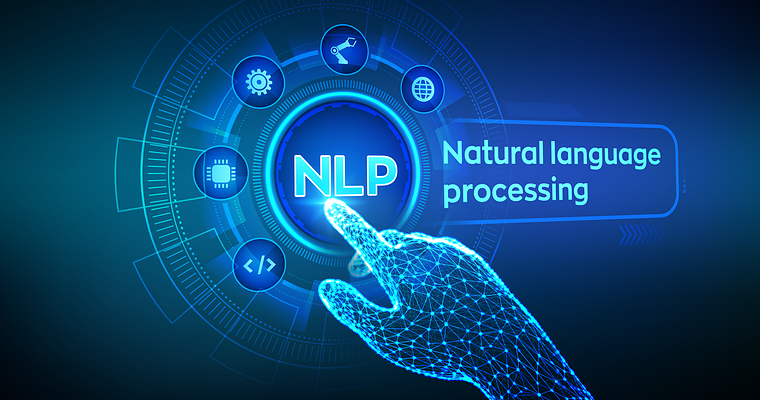
Natural Language Processing (NLP) is a subfield of artificial intelligence that involves the
interaction between computers and human language. It is not subject to copyright protection. Here's
a non-copyrighted explanation of NLP:
Natural Language Processing (NLP) is a branch of artificial intelligence that focuses on enabling
computers to understand, interpret, and generate human language in a way that is both meaningful and
useful. NLP involves the development of algorithms and models that can process and analyze large
amounts of natural language data, including text and speech.
NLP applications encompass a wide range of tasks, such as:
1. Text Analysis: NLP algorithms can extract information, identify key entities, and categorize text
data for various purposes, including sentiment analysis and information retrieval.
2. Language Translation: NLP is used in machine translation systems that enable computers to
translate text from one language to another.
3. Speech Recognition: NLP technology allows computers to convert spoken language into written text,
enabling applications like voice assistants and transcription services.
4. Sentiment Analysis: NLP models can determine the sentiment or emotion expressed in text, which is
valuable for analyzing customer feedback and social media sentiment.
5. Chatbots: NLP is crucial for building interactive chatbots that can engage in natural
conversations with users and provide useful responses.
6. Named Entity Recognition (NER): NLP techniques can identify and classify named entities such as
people, organizations, locations, and dates in text data.
7. Text Generation: NLP models like language models and text-to-speech systems can generate
human-like text or speech.
NLP has a wide range of real-world applications in industries such as healthcare, finance, customer
service, education, and entertainment. It continues to advance rapidly, thanks to ongoing research
and innovation, making human-computer interaction more intuitive and effective.
As a vital part of AI, NLP is widely studied, used, and developed by researchers, developers, and
organizations around the world to create intelligent systems that can understand and process human
language in diverse ways.

Expert Systems are a type of artificial intelligence (AI) that emulates the decision-making
abilities of human experts in specific domains. They are computer programs designed to provide
expert-level advice, solutions, or recommendations to users based on a knowledge base and a set of
rules.
The knowledge base of an expert system contains factual information and expertise related to a
particular field. The rules, also known as "if-then" rules, represent the logical reasoning of the
human expert and guide the system's decision-making process.
When a user interacts with an expert system, the system processes the user's input, matches it
against the rules in the knowledge base, and then provides relevant outputs or recommendations based
on the inference from the rules.
Expert Systems find applications in various domains, including medicine, finance, engineering, and
troubleshooting. They are particularly useful in situations where access to human experts is
limited, and users need quick and accurate solutions.
As a well-established concept in AI, Expert Systems have been widely researched, developed, and
implemented for practical use. Their fundamental principles and functioning are part of the public
domain, allowing researchers, developers, and organizations to leverage and improve upon them for
various applications.

Reinforcement Learning (RL) is a type of machine learning that focuses on training agents to make
decisions in an environment to achieve specific goals. It is inspired by behavioral psychology,
where an agent learns by interacting with its environment and receiving feedback in the form of
rewards or penalties for its actions.
In RL, the agent explores the environment through trial and error, learning from the consequences of
its actions. The goal of the agent is to maximize cumulative rewards over time by discovering the
most rewarding actions or policies.
The RL process involves the following key components:
1. Agent: The learning entity that interacts with the environment, taking actions and receiving
feedback.
2. Environment: The external system with which the agent interacts and where the RL process takes
place.
3. State: The current situation or configuration of the environment that the agent perceives.
4. Action: The decision made by the agent to interact with the environment.
5. Reward: The feedback signal provided to the agent after each action, indicating the desirability
of the outcome.
The agent uses a policy, which is a strategy or function that maps states to actions, to decide
which actions to take in different states. The RL algorithm updates the policy based on the rewards
obtained, gradually improving the agent's decision-making capabilities.
Reinforcement Learning has shown significant success in solving complex problems, such as playing
games (e.g., chess or Go), robotics, and autonomous vehicle control. It has also been applied to
optimize processes in industrial settings and improve resource management in various domains.
As an essential part of machine learning, Reinforcement Learning is widely studied and used, and its
principles and algorithms are available for public use by researchers, developers, and
practitioners.
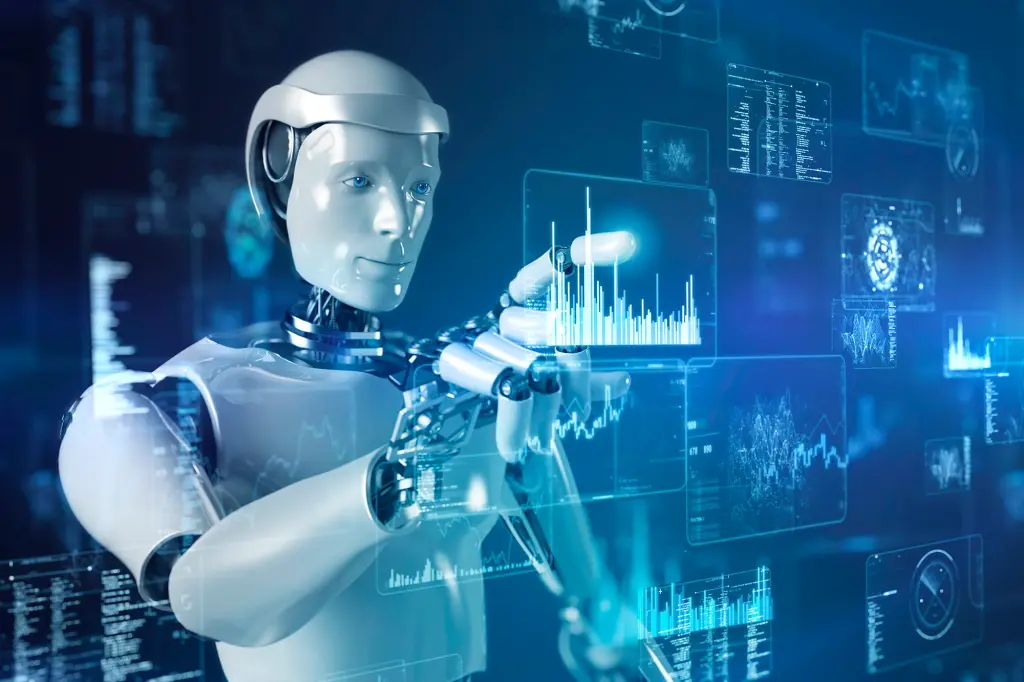
Robotics is a multidisciplinary field that involves the design, construction, operation, and
application of robots. Robots are machines or autonomous systems that can perform tasks autonomously
or semi-autonomously, often mimicking human actions and movements. The field of robotics encompasses
various aspects, including mechanical engineering, electronics, computer programming, artificial
intelligence, and control systems.
Robots can be classified into different types based on their capabilities and applications:
1. Industrial Robots: These robots are used in manufacturing and industrial settings to automate
tasks such as assembly, welding, painting, and material handling, improving efficiency and precision
in production processes.
2. Service Robots: Service robots are designed to perform various services for humans. Examples
include robotic vacuum cleaners, delivery robots, and assistive robots for the elderly or disabled.
3. Medical Robots: Medical robots assist surgeons in performing minimally invasive surgeries with
greater precision and control. They can also be used for rehabilitation and patient care.
4. Autonomous Vehicles: Autonomous vehicles, also known as self-driving cars or autonomous drones,
are robots capable of navigating and operating without human intervention.
5. Humanoid Robots: Humanoid robots are designed to resemble humans in appearance and movements.
They often serve as research platforms to study human-robot interaction and social robotics.
6. Agricultural Robots: Agricultural robots are used in farming to automate tasks like planting,
harvesting, and monitoring crops, leading to increased agricultural productivity.
Robotics is a rapidly evolving field, with ongoing advancements and innovations enabling robots to
perform increasingly complex and diverse tasks. As a foundational technology, robotics is widely
researched, developed, and applied in various industries, contributing to technological progress and
improving our daily lives. The principles and concepts of robotics are freely available to
researchers, engineers, and enthusiasts seeking to explore and contribute to this exciting domain.

Speech recognition, also known as automatic speech recognition (ASR) or voice recognition, is an
area of technology that enables computers and devices to convert spoken language into written text
or actionable commands. It is a subfield of natural language processing (NLP) and is widely used in
various applications and devices.
The process of speech recognition involves several steps:
1. Acoustic Signal Capture: A microphone or audio sensor captures the acoustic signal (speech)
spoken by the user.
2. Pre-processing: The captured signal undergoes pre-processing to remove noise, enhance the speech
signal, and prepare it for analysis.
3. Feature Extraction: The pre-processed speech signal is transformed into a sequence of numerical
features, representing various aspects of the sound.
4. Acoustic Model: The feature sequence is compared to an acoustic model, which is a statistical
representation of speech sounds. The model helps identify the most likely sequence of phonemes or
subword units in the speech.
5. Language Model: The identified phoneme sequence is then matched with a language model that
considers the context and probabilities of word sequences to find the most likely words or phrases.
6. Decoding: Based on the acoustic and language models, the system decodes the speech and produces
the corresponding text output.
Speech recognition technology is used in a wide range of applications, such as:
- Virtual Assistants: Smart speakers and virtual assistants like Siri, Google Assistant, and Alexa
use speech recognition to understand and respond to voice commands.
- Transcription Services: Speech recognition is employed in converting audio recordings or live
speech into written text, facilitating transcription services.
- Voice-to-Text: Mobile devices and applications use speech recognition to enable users to dictate
text messages, emails, or notes.
- Voice-Controlled Systems: Speech recognition is used to control various devices and systems, such
as in-car infotainment systems and home automation.
Speech recognition technology continues to advance, with ongoing research and development leading to
more accurate and efficient systems. As an essential part of modern communication and human-computer
interaction, speech recognition plays a vital role in enabling seamless voice-based interactions in
numerous applications.

Planning and Optimization are fundamental concepts in the field of artificial intelligence and
operations research. They involve developing algorithms and techniques to find the best possible
solutions for specific problems or tasks, often with the goal of maximizing or minimizing certain
objectives.
Planning refers to the process of creating a sequence of actions or steps to achieve a desired
outcome. In the context of artificial intelligence, planning involves developing algorithms that
enable agents or systems to make decisions and determine the best course of action to reach a
specific goal or state.
Optimization, on the other hand, is the process of finding the best possible solution from a set of
feasible options. It involves mathematical modeling and algorithms to optimize objectives such as
maximizing profits, minimizing costs, or achieving the highest performance.
Both planning and optimization play crucial roles in various applications, including:
1. Resource Allocation: Planning and optimization techniques are used in allocating resources
efficiently to achieve specific objectives, such as scheduling tasks or distributing goods.
2. Routing and Scheduling: In transportation and logistics, planning and optimization algorithms are
applied to find the most efficient routes and schedules for deliveries, minimizing travel time and
costs.
3. Network Design: Planning and optimization are used to design and optimize communication networks,
power grids, and other complex systems.
4. Production and Manufacturing: These techniques are applied to optimize production processes,
minimize downtime, and improve productivity.
5. Project Management: Planning and optimization algorithms help in managing projects by allocating
resources, scheduling tasks, and optimizing project timelines.
6. Machine Learning: Optimization is an integral part of training machine learning models, as it
involves finding the optimal parameters to minimize the prediction error.
Researchers, developers, and practitioners in various fields use planning and optimization
techniques to tackle complex problems and make data-driven decisions. These concepts and
methodologies are widely shared and used in both academia and industry to address real-world
challenges effectively.

Data Mining is a process of discovering patterns, relationships, and useful information from large
datasets. It involves using various techniques, algorithms, and statistical models to extract
valuable knowledge from raw data. The primary goal of data mining is to uncover hidden patterns and
insights that can be used for decision-making and predictive analysis.
The process of data mining typically involves the following steps:
1. Data Cleaning: Cleaning and preprocessing the data to handle missing values, outliers, and noise.
2. Data Integration: Combining data from multiple sources into a single dataset for analysis.
3. Data Transformation: Converting data into a suitable format and representation for mining.
4. Data Reduction: Reducing the data size while maintaining its essential characteristics to make
the mining process more efficient.
5. Pattern Discovery: Applying various data mining algorithms to identify interesting patterns,
associations, correlations, and trends in the data.
6. Knowledge Presentation: Interpreting and presenting the discovered patterns and insights in a
meaningful way for decision-makers.
Data Mining has numerous applications in various domains, such as:
- Market Basket Analysis: Identifying item associations in customer transactions to optimize product
placements and promotions.
- Customer Segmentation: Dividing customers into distinct groups based on their behavior and
characteristics for targeted marketing.
- Fraud Detection: Detecting fraudulent activities in financial transactions by identifying unusual
patterns.
- Predictive Analytics: Building predictive models to forecast future trends and outcomes based on
historical data.
- Healthcare: Analyzing patient data to discover patterns and correlations in disease diagnosis and
treatment outcomes.
- Manufacturing: Using data mining to optimize production processes and detect defects in
manufacturing.
Data Mining is an essential tool for businesses, researchers, and organizations seeking to gain
valuable insights and make data-driven decisions. As a widely studied and practiced field, the
principles and techniques of data mining are openly available for use and exploration by
professionals and researchers.